
 |
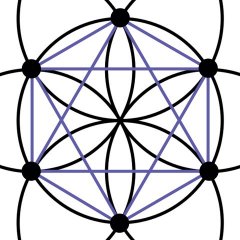
| hexagon and hexagram |
Varieties in the Oera Linda-book
noun
HEX (3), plur. HEXNA (4) - witch, sorceress
verb
HÉDE HEXNAD (1), HETH BIHEXNATH (2) - had/has (be)witched, hexed
(infinitive would have been HEXNA)
Note: another word for sorceress or witch in OLB is THJONSTER (used once).
OLB fragments with new translations

1 [034/10]
THÁ GVNGON HJA HJA BIHLVDA ÀND SÉIDON THAT HJU.T FOLK HEXNAD HÉDE.
[then they] began to denigrate her, saying she had bewitched the people.
2 [064/28]
MEN MIN.ERVA HETH AL.ET FOLK BIHEXNATH. JES BIHEXNATH FRJUNDA. IVIN AS AL VS FJA THÀT LÀSTEN STURVEN IS.
But Minerva has bewitched all the folk — yes bewitched, my friends — even as all our cattle that died recently.
3 [065/01]
IK SKOLDE THJU HEX IN HJARA NEST VRBARNE.
I would burn that witch in her nest!
4 [133/10]
ÔLON LÁWATH HJA AN BOSA GÁSTA. HEXNA. KOLLA. ULDERMANKES.
ÀND ELF⬤⬤ AS JEF HJA FON THA FINNA WEI KÉMEN.
They invariably believe in vengeful ghosts, witches, sorcerers, huldermen,
noun
HEX (3), plur. HEXNA (4) - witch, sorceress
verb
HÉDE HEXNAD (1), HETH BIHEXNATH (2) - had/has (be)witched, hexed
(infinitive would have been HEXNA)
Note: another word for sorceress or witch in OLB is THJONSTER (used once).
OLB fragments with new translations

1 [034/10]
THÁ GVNGON HJA HJA BIHLVDA ÀND SÉIDON THAT HJU.T FOLK HEXNAD HÉDE.
[then they] began to denigrate her, saying she had bewitched the people.
 |
| Olaus Magnus 1555 depicted witches causing bad weather and cattle disease |
MEN MIN.ERVA HETH AL.ET FOLK BIHEXNATH. JES BIHEXNATH FRJUNDA. IVIN AS AL VS FJA THÀT LÀSTEN STURVEN IS.
But Minerva has bewitched all the folk — yes bewitched, my friends — even as all our cattle that died recently.
3 [065/01]
IK SKOLDE THJU HEX IN HJARA NEST VRBARNE.
I would burn that witch in her nest!
4 [133/10]
ÔLON LÁWATH HJA AN BOSA GÁSTA. HEXNA. KOLLA. ULDERMANKES.
ÀND ELF⬤⬤ AS JEF HJA FON THA FINNA WEI KÉMEN.
They invariably believe in vengeful ghosts, witches, sorcerers, huldermen,
and elves — as if they stemmed from the Finns.
Varieties in modern languages
The assumption of some etymologists that the word would be derived from 'hagazussa' (Hague-/ hedge-sister) or 'hagetisse' (lizard), is probably based on medieval folk-etymology. A relation to Greek ἕξ (hex): "six" and the six-spoke wheel makes more sense.
 |
| Hexology by J. Ott a.o. |
| Hexe | behexen/verhexen | German |
| heks(e) | hekse | Frisian |
| häxa | förhäxa | Swedish |
| heks | beheksen | Dutch |
| heks | forhekse | Danish, Norse |
The assumption of some etymologists that the word would be derived from 'hagazussa' (Hague-/ hedge-sister) or 'hagetisse' (lizard), is probably based on medieval folk-etymology. A relation to Greek ἕξ (hex): "six" and the six-spoke wheel makes more sense.
 |
| Pennsylvania Dutch Hex Signs |
As de zunne schient en het regent,
dan wörde zegd deur olde meinzen:
de heksen bint an het pannekoe
(Dwingeloo)

No comments:
Post a Comment